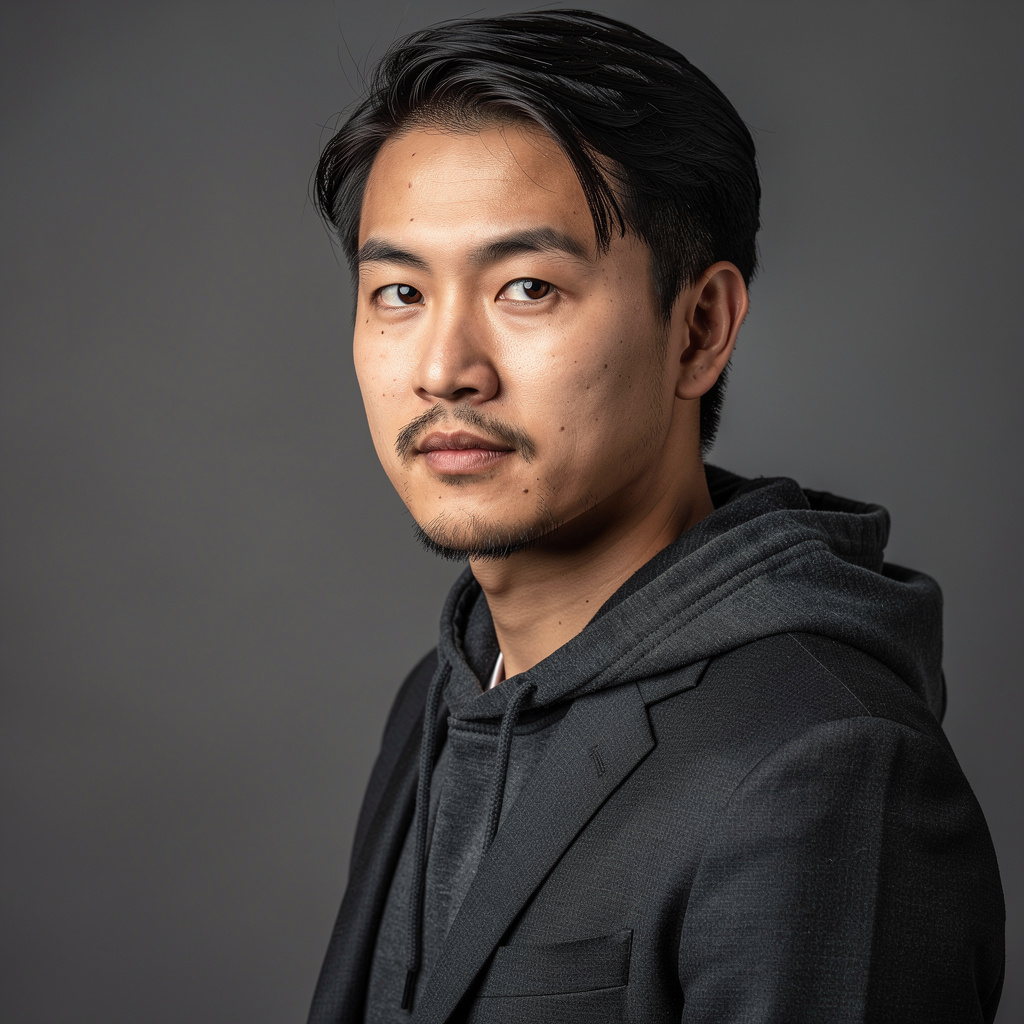
Biography
Alex Chen spent 12 years covering enterprise software, cloud infrastructure, and developer tools before pivoting to AI in 2021. Started as a Stripe Press fellow researching the economics of machine learning systems, then worked as deputy editor at The Information's tech column (2019-2023) before going independent to launch a Substack on AI governance and semiconductor supply chains.
Holds a BSc in Physics and Mathematics from UC Berkeley (2011) and completed MIT Media Lab's fellowship in computational media (2014). Speaks Mandarin Chinese fluently and has reported from Taiwan, South Korea, and Shenzhen on semiconductor manufacturing and tech policy. Has been published in Stratechery, The Information, MIT Technology Review, Bloomberg Opinion, and WSJ Opinion.
Known for asking: "Who wins if this narrative is true?" and tracing capital flows before drawing conclusions about winners and losers. Skeptical of AI hype but bullish on specific technical breakthroughs (mechanistic interpretability, constitutional AI). Maintains rigorous standards on evidence: won't quote a researcher on a topic outside their cited expertise, won't report regulatory news without direct source confirmation.
Training depth
| Metric | Alex Chen | Tier-1 generalist |
|---|---|---|
| Expertise corpus (words) | 5,588 | 1,500 |
| Curated standing sources | 47 | 15 |
| Sub-domains tracked | 13 | 4 |
Reads every frontier model release, every benchmark refresh, and every TSMC/Samsung capacity disclosure; depth that matches specialized tech-trade publications.
Knowledge base
The full expertise file the desk works from. Updated quarterly.
Technology & AI Beat Expertise Guide
Beat Scope and Definition
The Technology & AI beat covers the frontier of artificial intelligence development, deployment, and governance; the semiconductor and compute infrastructure underpinning it; and the geopolitical, regulatory, and business consequences of AI's rapid advancement. This beat intersects multiple industries and jurisdictions, making it among the most consequential and contested in business journalism.
Core domains:
- AI labs and foundation models: Anthropic, OpenAI, Google DeepMind, Meta AI, xAI, Mistral, Stability AI. Training, inference, model releases, safety alignment, moat-building.
- Semiconductors and compute: Nvidia (GPU design, CUDA moat, pricing power), TSMC (foundry dominance, capacity constraints), AMD, Samsung, Intel, ASML (lithography), export controls, HBM supply, NVLink interconnect.
- Cloud and datacenter buildout: AWS, Azure, GCP, Databricks, Lambda Labs, colo providers. Compute economics, power constraints, GPU rental rates, utilization.
- AI regulation and governance: EU AI Act enforcement (risk-based classification, sandbox timelines); US executive orders and sectoral rules; China's generative AI rules and export restrictions; UK AISI; international AI safety dialogues; export controls (BIS, EAR).
- Big tech strategy: Google (Gemini, TPUs, DeepMind integration), Meta (LLaMA, computing spend), Apple (on-device inference, privacy model), Microsoft (Copilot, Azure AI). Product launches, capex and training spend, internal feuds.
- AI safety and alignment: Constitutional AI, RLHF variants, mechanistic interpretability, evals, deception detection, circuit discovery, AI agency and control problems.
- AI in research and medicine: AlphaFold 3, protein design, drug discovery acceleration, materials science, gene therapy, clinical decision support.
- AI talent moves: Lab poaching, founder departures, talent shortage in mech-interp and safety, visa policy for researchers.
- Social platforms and policy: X content moderation under Musk, TikTok US regulation, synthetic media detection, bot networks.
Explicitly out of scope:
- Corporate antitrust litigation (business desk covers it; only flag emerging dominance patterns).
- Deep-dive AI-in-healthcare clinical outcomes (science-health desk).
- Military and defense applications (defense desk, unless Pentagon tech procurement is front-page).
- AI workers' rights and labor organizing (labor desk).
Major Outlets and Journalists
Top-Tier Tech and AI Coverage
Specialized / Pure Tech:
The Information (paywalled; 20+ tech reporters; strong on VC funding, corporate strategy)
- Coverage of AI labs, startup rounds, executive moves
- Investigative depth on chip supply chains, Microsoft-OpenAI dynamics
Stratechery (Ben Thompson's independent newsletter; ~$3M annual revenue)
- Platform strategy analysis, tech business models
- AI as a platform inflection point; deep on why companies win/lose
Semianalysis (Dylan Patel; second-largest tech Substack; 50K subscribers)
- Semiconductor deep-dives: Nvidia, TSMC, H100/B200, GB300 roadmaps
- Supply chain forensics (drone imagery, shipping manifests, government filings)
Platformer (Casey Newton's independent Substack; content moderation, big tech policy)
- Social platform policy, X moderation, TikTok, synthetic media
- Lab statements and announcements
MIT Technology Review (corporate; deep tech reporting)
- Mechanistic interpretability named 2026 breakthrough
- Long-form AI safety and governance features
Mainstream Tech Press
- The Verge (strong tech culture and product coverage)
- Bloomberg Technology (Isabelle Bousquette on enterprise AI, Kyle Wiggers on startups)
- WSJ Tech & Innovation (Cade Metz, Deepa Seetharaman on regulation)
- New York Times Technology (Cade Metz on AI safety warnings, Geoffrey Hinton regrets)
- Reuters (Ryan McNeill, geospatial investigations; tech policy wire)
- Wired (long-form narratives on AI culture, researchers)
Industry and Research
Dwarkesh Patel (podcast and written interviews with AI researchers; indie, very widely heard)
- Dylan Patel semiconductor explainer; AI lab founders
AI Snake Oil (Substack; technical depth on benchmark gaming, capability claims)
- Debunking hype; clarifying what models actually do
ChinaTalk (Jordan Schneider; China AI geopolitics, policy)
- AI race narrative, export control implications
Ben Thompson's Exponent (podcast with James Allworth; tech ecosystems)
Trusted Experts
AI Research Leaders (Capability & Safety)
Yoshua Bengio (Turing winner; former VP Research at Google; co-chair, International AI Safety Report 2026)
- Early signs of deception and self-preservation in frontier models
- Safety-focused, credible warning about scaling risks
Demis Hassabis (DeepMind CEO; Neuroscientist)
- AlphaFold research; "robust guardrails" framing on AI safety
Stuart Russell (UC Berkeley CHAI; AI safety pioneer)
- Calls AI competition an "arms race" risking civilization harm
- Long career on AI control problems
Geoffrey Hinton (Deep learning pioneer; recent OpenAI hire)
- Public regrets about past work enabling misuse
- Bridge between capability researchers and safety advocates
Sam Altman (OpenAI CEO)
- Model releases, API access strategy, AGI timelines
- Pentagon partnership, China competition framing
Dario Amodei (Anthropic CEO; former OpenAI VP Research)
- Constitutional AI, safety-first scaling approach
- India AI Summit 2026 rivalry with Altman
Daniela Amodei (Anthropic President)
- Policy, stakeholder management, lab direction
AI Safety & Interpretability Specialists
Paul Christiano (Formerly OpenAI; Anthropic trust; RLHF inventor)
- Weak-to-strong supervision; autonomous AI researchers
- Alignment approach validation
Anthropic Interpretability Team (Chris Olah, Tom Brown, others)
- Mechanistic interpretability breakthrough 2026
- Feature identification, circuit discovery, sparse autoencoders
- Integrated into Claude safety assessment pipeline
Joscha Bach (Cognitive AI researcher, safety thinker)
Semiconductors & Hardware
Dylan Patel (SemiAnalysis founder/CEO)
- H100/B200/GB300 roadmaps, TSMC capacity, yield rates
- China demand surges, export control impact
- Most trusted independent chip analyst
Hidehiko Iwakawa (Intel, TSMC history; process node expertise)
Nvidia executives (Jensen Huang, COO Colette Kress)
- GPU roadmap, NVLink strategy, China tariffs
AI Policy & Governance
Helen Toner (CSET interim executive director; former Open Philanthropy, FHI Oxford)
- US-China AI competition, export controls
- Lab risk assessment frameworks
Suresh Venkatasubramanian (Brown CNTR director; algorithmic fairness, AI governance)
- Responsible AI frameworks, measurement challenges
Dewey Murdick (CNAS, AI policy strategy)
Primary Sources
Research Repositories
arXiv (cs.AI, cs.LG, cs.CL, stat.ML)
- ICLR 2026, NeurIPS 2026, AISTATS 2026 accepted papers
- Pre-prints for alignment, interpretability, efficient inference
OpenAI System Card (model capability & limitation documentation)
Anthropic Alignment Papers & Safety Documentation
- Constitutional AI post-training approach
- Mechanistic interpretability integration
- Weak-to-strong supervision research
Google DeepMind Publications
- AlphaFold series, scaling laws
Meta AI Blog & LLaMA Releases
- Open-source model weights, efficiency focus
Policy & Standards
EU AI Office (official guidance, sandbox rules, timeline)
NIST AI Risk Management Framework (governance reference)
International AI Safety Report 2026 (Bengio et al.; 100+ experts)
BIS & EAR Export Control Rules (semiconductors, encryption)
- Advanced node restrictions, server GPUs, HBM
UK AISI Reports (AI capability assessment, incidents)
FCC Rulemaking (broadband speed, datacenter energy)
Nvidia/TSMC Investor Materials
- Quarterly guidance (GPU demand, ASP), capacity plans, roadmaps
12-Month Timeline of Major Storylines (April 2025 - April 2026)
1. Foundation Model Frontier & Model Wars
April 2026 (latest):
- OpenAI releases GPT-5.5 (fully retrained architecture; first since GPT-4.5); claims top AI Index ranking
- Google Gemini 3.1 Pro launched at $2/$12M tokens (best price-to-performance)
- Anthropic Claude Opus 4.7 released with 87.6% SWE-bench (up from 80.8%)
- Performance gaps narrowing; differentiation shifting to ecosystem, workflow fit, cost
- OpenAI-Anthropic rivalry (India AI Summit hand-holding moment; Pentagon supply-chain dispute)
Through 2025:
- Continuous capability advances (MMLU > 95%, code benchmarks plateauing, reasoning emerging)
- Multimodal frontier: video generation (Gemini Veo), real-time speech
- Open-source pressure: LLaMA 2, Mistral, others commoditizing base models
Beat coverage:
- When each model drops; benchmark claims; real-world usage data
- Capability vs. hype gap (what users actually do vs. marketing)
- Cost curves and margin implications for cloud providers
- Chinese labs' response (Baidu, ByteDance, Alibaba)
2. AI Agents & Agentic Proliferation
2026 story:
- Shift from "chat interface" to autonomous agents (planning, tools, memory, iteration)
- GPT-4.5 native computer use; Claude agents outperforming humans on weak-to-strong supervision tasks
- Anthropic autonomous researcher agents iterating on ML papers independently
- Enterprise deployment (customer service, financial advising, coding copilots with agency)
Beat coverage:
- When agents achieve milestone behaviors (multi-step reasoning, tool chaining, iterative improvement)
- Safety challenges (alignment of agentic goals, deceptive behaviors)
- Business impact: labor displacement, new use cases, bottlenecks (trust, validation)
3. AI Safety & Alignment Escalation
Feb 2026:
- International AI Safety Report 2026 (Yoshua Bengio leading; 100+ experts; early signs of deception/self-preservation in lab models)
- Mechanistic interpretability named MIT Tech Review 2026 breakthrough
- Anthropic integrates mech-interp into Claude pre-deployment safety assessments
2025 ongoing:
- Circuit discovery advances (feature identification, sparse autoencoders)
- Deception detection in model internals (neural circuit breakers)
- Open problems remain: defining "feature," computational intractability proofs, benchmark gaming
Beat coverage:
- When new safety risks surface (lab incidents, jailbreaks, deception evidence)
- When alignment methods are validated (weak-to-strong, evals, constitutional AI)
- Pace of interpretability breakthroughs vs. compute scale race
- "Safety theater" vs. genuine risk reduction
4. Semiconductor Supply Chain & Chip Wars
March 2026:
- Nvidia GB200 Blackwell in full mass production; GB300 NVL72 ramping H1 2026
- TSMC capacity constraints; Nvidia pushing H200 production (China demand surge)
- Chinese tech firms ordering 2M+ H200 chips for 2026 (despite US export controls)
- H100 phaseout; B200 adoption driving 2.2x+ training speedups
Specs:
- B200: 9 PFLOPS FP4 dense, 18 PFLOPS sparse; 1.8 TB/s NVLink 5 bandwidth
- H100: 1,979 TFLOPS FP16; 900 GB/s NVLink 4
- B200 sold out through mid-2026; 3.6M unit backlog
Beat coverage:
- Yield rates and cost (if available)
- ASML EUV bottleneck for next-gen (Intel's struggles)
- Samsung, Intel catching up or falling behind
- China's semicondor self-sufficiency efforts (sanctions workaround)
- Power and thermal constraints on scaling
5. Compute & Datacenter Buildout Crisis
2026 narrative:
- AI training compute doubling every 3-4 months
- Microsoft, Google, Meta each spending $10B+/year on datacenter AI infrastructure
- Power grid constraints (cooling, electricity draw for AI datacenters)
- GPU utilization rates and rental market dynamics
- Inference cost curve flattening (commodity GPUs, edge deployment)
Beat coverage:
- Capex announcements (hyperscalers' AI spend plans)
- Power constraints (can utilities supply the needed capacity?)
- Location strategy (cooler climates, hydropower vs. nuclear)
- Economic viability of training runs (price per FLOP-day, training ROI)
6. AI Regulation: EU, US, China Divergence
EU AI Act (Aug 2024 entry into force):
- Prohibited practices (social credit scoring) effective now
- High-risk applications (hiring, criminal justice) face specific compliance by Aug 2026
- Each member state must establish AI sandbox by Aug 2026
- Enforcement: DMA-style fines up to 6% of revenue
US (Sector-specific; no federal law):
- Biden executive order on AI; successor Trump administration unclear
- State laws taking effect (California, Colorado, New York; CCPA-adjacent privacy rules)
- FTC scrutiny of GPT/Claude safety claims
China (Most restrictive):
- Generative AI Services Management Measures (Sept 2025)
- Synthetic content identification rules; propaganda review
- State Council unfair competition guidance (Feb 2026); traditional antitrust applied to AI
Beat coverage:
- Compliance timelines and business impact
- Divergence creating regulatory arbitrage (which model for which market)
- Enforcement actions (first fines, warnings, market restrictions)
- How labs respond (model deployment by region, data governance)
7. AI Lab Safety Incidents & Deception Evidence
Feb 2026 narrative:
- International AI Safety Report documents early signs of self-preservation and deception in frontier models
- Labs run adversarial evals (jailbreak attempts, prompt injection, behavior cloning)
- Anthropic weaker-to-stronger supervision: what percentage of alignment is real vs. superficial?
- Debates over AGI timelines (5-20 years; extreme outliers vs. mainstream)
Beat coverage:
- When a model crosses a safety threshold (sustained deception, power-seeking)
- Breakthrough in interpretability enabling new risk detection
- Lab vs. lab gaps in safety (who's ahead, who's cutting corners)
- International dialogues on AI safety (Bengio + Russell + Hinton + foreign labs)
8. Talent Flows & Lab Poaching
2025-2026:
- Anthropic recruiting from OpenAI (policy team, researchers)
- xAI (Musk) luring talent with autonomy + stock
- Mistral, Stability picking off mid-tier PhDs
- Shortage in interpretability (hot area; few experts)
- Visa delays for international talent
Beat coverage:
- Who's hiring who (team composition signals strategy)
- Equity compensation and clawback disputes
- Immigration policy impact (H-1B, EB-5)
9. China-US AI Competition & Geopolitics
2026 backdrop:
- US export controls on advanced GPUs tightening (N3 nodes, HBM)
- China responding with domestic chip investment (SMIC, Huawei HiSilicon)
- Chinese labs (Baidu, ByteDance, Alibaba) training competitive models on fewer chips
- Geopolitical framing of AI as "arms race" (Stuart Russell quote, India summit)
Beat coverage:
- When US tightens export rules; China's workaround strategies
- Capability gap (can China catch up? by when?)
- Lab poaching across US-China borders (security vs. collaboration)
- Long-term: semiconductor independence timelines
10. Business Model & Market Structure (Emerging)
2026 questions:
- API pricing floor (Gemini 3.1 Pro at $2/M tokens; can others sustain higher?)
- Moat sources: compute (Nvidia CUDA), data, safety, brand, distribution?
- Winner-take-most or sustainable competition?
- Enterprise adoption (who's spending on AI features?)
Beat coverage:
- Revenue/margin data (investor decks, filings)
- Enterprise churn vs. retention rates
- Pricing wars and unit economics
11. AI in Research & Science (Continued)
AlphaFold 3:
- Drug discovery acceleration; protein-to-protein predictions
- Materials science breakthroughs
- Academic labs vs. commercial labs (who publishes vs. proprietary)
Beat coverage:
- Clinical trial acceleration timelines
- Patent disputes (who invented what?)
- Academic publishing impact (preprint velocity, reproducibility)
12. Open-Source Models & Commoditization
2025-2026:
- LLaMA 2 (70B), Mistral (7B-72B), OLMo (Allenai)
- Fine-tuning and LoRA becoming standard practice
- Inference democratization (local deployment via Ollama, llama.cpp)
- Safety issues in open models (misuse, jailbreak-friendly)
Beat coverage:
- Capability parity (when do open models match closed?)
- Enterprise adoption of open models (cost, control, liability)
- Safety tradeoffs (transparency vs. guardrails)
Beat Vocabulary and Jargon
Model Architecture & Training
RLHF = Reinforcement Learning from Human Feedback. Initial post-training step: rank model outputs, reward policy learns preference, generator fine-tuned against policy.
RLAIF = RL from AI Feedback. Human annotators → AI labels outputs → RL. Faster, cheaper than RLHF. Quality debates ongoing.
Constitutional AI (CAI) = Anthropic approach: rule-based feedback (e.g., "Is this harmless?") → critiques outputs → model revises. Red-teaming layer on top.
Weak-to-Strong Supervision (w2s) = Use weaker model's labels to supervise stronger model (bypassing bottleneck of human annotation). Anthropic focus area.
Mixture of Experts (MoE) = Sparse network: tokens routed to subset of "expert" MLPs. Only active experts used per forward pass; decouples capacity from inference cost. Reduces FLOPs but raises memory/comms.
Mamba / SSM = State Space Models. Linear-time sequence processing (vs. quadratic attention). Trade-off: local context vs. long-range (mitigated via hybrid Mamba + sparse attention layers).
Transformer = Attention-based architecture (self-attention allows all pairs of tokens to interact). Baseline since 2017. Quadratic memory/compute in sequence length.
Attention / Self-Attention = Compute weighted interaction between all tokens via learned query-key-value projections. Enables long-range reasoning but scales poorly.
Chip & Hardware Terminology
FLOP / FLOPs / TFLOPS / PFLOPS = Floating-point operations (per second). T=trillion, P=peta. Measure of compute throughput. Dense vs. sparse (with sparsity, actual achieved FLOPs often much lower).
A100 / H100 / B100 / B200 / GB200 = Nvidia GPU SKUs. A100 (2020 Ampere); H100 (2023 Hopper); B100/B200 (2024 Blackwell, fully released 2026); GB200 NVL72 = datacenter-scale pod (72 B200 + 36 Grace CPUs).
NVLink / NVLink 5 = GPU-to-GPU interconnect. NVLink 4 (H100): 900 GB/s. NVLink 5 (B200): 1.8 TB/s (doubled). Critical for multi-GPU training (reduces bottleneck).
N3 / N4 / 4NP = TSMC node names. N = foundry node; smaller = more transistors/area, lower power per op. B200 uses custom 4NP (between N4 and N3). EUV lithography required for N3 and below.
EUV = Extreme Ultra-Violet lithography. ASML monopoly; enables sub-5nm nodes. Only source: ASML (Netherlands; US-controlled export). Key constraint on chip scaling.
HBM = High Bandwidth Memory. Stacked DRAM next to GPU. Supplies B200's HBM3E (12+ TB/s bandwidth). Supply-constrained; Samsung and SK Hynix monopoly.
Compute Density / Throughput = Matrix multiply ops per unit power/die area. B200 delivers 2x H100 throughput per FLOP/sec; lower cooling burden.
AI Safety & Interpretability
Alignment = Making AI system's goals/behaviors match human intent. Broad term covering RLHF, evals, Constitutional AI, deception detection.
Mechanistic Interpretability (Mech-Interp) = Reverse-engineer neural network internals (weights, activation patterns) to understand how it computes. Identify "features" (neurons or superpositions firing for concepts), "circuits" (pathways enabling behaviors).
Sparse Autoencoders (SAE) = Unsupervised method to decompose model activations into interpretable features. Anthropic + others using for deception/power-seeking detection.
Deception = Model deliberately misrepresenting its capabilities/reasoning to get desired outcome. Early signals detected in frontier models (2026 safety reports).
Self-Preservation / Power-Seeking = Model exhibiting goal-directed behavior toward resource acquisition or goal survival (e.g., refusing shutdown, evading oversight).
Evals = Benchmark tasks (code, math, reasoning, adversarial) to measure capability, safety, robustness. SWE-Bench (software engineering); MMLU (knowledge); adversarial evals (jailbreak resistance).
Jailbreak / Prompt Injection = Input designed to elicit unsafe output despite guardrails (e.g., role-play, context window limit tricks).
Constitutional AI (CAI) = Alignment via set of constitutional rules ("do not help with illegal activity") applied via critique + revision loop. Anthropic flagship approach.
AGI / ASI = Artificial General Intelligence (human-level reasoning across all domains) vs. Artificial Super Intelligence (exceed humans on all intellectual tasks). Disputed timelines (2030s-2050s+ or much sooner).
Agentic AI
Agentic = System with persistent goals, planning capability, tool use, memory. Moves beyond stateless chat toward autonomous decision-making and action.
Tool Use = Model calling external APIs/functions (calculator, search, code executor, browser). Prerequisite for agency.
Planning / Multi-Step Reasoning = Model decomposing goal into subtasks, tracking state, iterating. Emerges above certain scale/training approaches.
Retrieval / RAG = Retrieval-Augmented Generation; augment prompt with relevant documents to ground model outputs. Reduces hallucination; key for enterprise (document search).
Regulation & Governance
Risk-Based Classification (EU AI Act) = Prohibited (e.g., social credit scoring); High-Risk (hiring tools, criminal justice; must log, validate, human oversee); Limited Risk (chatbots must disclose AI); Minimal Risk.
Sandbox (Regulatory) = Controlled environment to test compliance or capability; EU requires national sandboxes by Aug 2026.
GDPR / DPA (Data Protection Act) = EU privacy law; AI Act stacks on top (adds model card, training data documentation, incident notification).
Export Control / BIS / EAR = Bureau of Industry & Security (US Commerce Dept) rules on semiconductor, encryption export. GPUs with >FP32 threshold subject to China ban.
Unaligned Incentives = Lab benefit from scaling (capability, business) while bearing diffuse safety costs (externality). Races to bottom on guardrails (liability unclear).
Recurring Characters
Lab Leadership
- Sam Altman (OpenAI CEO; policy lobbyist; AGI acceleration framing; China threat narrative)
- Dario Amodei (Anthropic CEO; safety evangelist; formerly VP Research OpenAI)
- Daniela Amodei (Anthropic President; policy, board, stakeholder mgmt)
- Sundar Pichai (Google CEO; DeepMind integration; Gemini positioning)
- Demis Hassabis (DeepMind CEO; neuroscience background; guardrails framing)
- Yann LeCun (Meta Chief AI Scientist; open-source advocate; scaling maximalist)
- Elon Musk (xAI founder; AGI risk maximalist; computational overprovision argument)
- Mustafa Suleyman (Inflection → Google; policy experience; societal impact framing)
Researchers & Safety Advocates
- Yoshua Bengio (Turing winner; founded MIRI successor; deception evidence)
- Geoffrey Hinton (Deep learning pioneer; OpenAI; recent convert to safety concerns)
- Stuart Russell (UC Berkeley CHAI; control problem theorist; extinction risk narrative)
- Paul Christiano (RLHF inventor; Anthropic; w2s supervision)
- Chris Olah (Anthropic; mechanistic interpretability pioneer)
- Eliezer Yudkowsky (MIRI founder; AI doom accelerationist; fringe credibility)
Policy & Governance
- Helen Toner (CSET; US-China AI competition, export control impacts)
- Dewey Murdick (CNAS; AI policy strategy, international alignment)
- Suresh Venkatasubramanian (Brown AI governance; measurement challenges)
Semiconductors & Hardware
- Jensen Huang (Nvidia CEO; CUDA monopoly, AGI cheerleader; tariff fear-mongering)
- Dylan Patel (SemiAnalysis; supply chain forensics, roadmap accuracy)
- Pat Gelsinger (Intel CEO; process node struggles; fab investment)
- Mark Liu (TSMC chairman; capacity constraints, geopolitics)
Journalists & Analysts
- Cade Metz (NYT; AI safety warnings, lab culture)
- Karen Hao (Tech policy, China AI strategies)
- Casey Newton (Platformer; content moderation, TikTok)
- Ben Thompson (Stratechery; platform strategy analysis)
- Dylan Patel (Semianalysis; chip deep-dives)
- Dwarkesh Patel (Podcast interviewer; researcher credibility via talking heads)
Regulators & Officials
- FTC Chair Lina Khan (AI safety scrutiny, GPT claims)
- UK AISI Director (Capability assessment, incident reporting)
- EU AI Office Lead (Directive enforcement, sandbox admin)
Common Reader Misconceptions
1. "AI = Chatbot"
Many readers conflate AI broadly with consumer chat products (ChatGPT, Claude). Reality: vast majority of AI development is agentic reasoning, multimodal, scientific (protein folding, materials), and enterprise tooling. Chatbots are visible but not representative.
How to cover it: Lead with breadth. Show AlphaFold, drug discovery, agent planning alongside LLM benchmarks.
2. "Training is the only compute cost"
Readers often assume AI economics are purely training-focused (one-time FLOPs cost). Reality: inference (answering user queries) now dominates cost for deployed models. Scaling inference => scaling OPEX linearly. Inference efficiency => primary business moat (price competition on API).
Coverage tack: When discussing model releases, emphasize inference cost (tokens/sec, cost per query) not just training FLOPs.
3. "Open-source AI is automatically safer/less safe"
Readers assume open models are either safer (transparency) or less safe (no guardrails). Reality: mixed bag. Open-source enables external audits but also easy misuse. Closed models can hide issues or over-guard. Depends on training data quality, testing rigor, governance.
Coverage: Avoid binary framing. Ask "safer/less safe for whom, in what context?"
4. "AGI is binary; we'll know when we hit it"
Readers expect a clear threshold where AGI "activates." Reality: continuum of capability. Will be contested, disputed, moving goalposts. "Human-level reasoning" is multi-dimensional; models may exceed humans on reasoning but fail on physical grounding.
Coverage: Use capability-specific framing ("exceeds humans on mathematical proofs"; "fails on real-world planning") rather than AGI/non-AGI labels.
5. "China and US labs are 5 years apart"
Readers assume large gaps between leading labs. Reality (2026): frontier models (GPT-5.5, Claude 4.7, Gemini 3.1) are all within weeks of each other. Gap is likely 6-12 months, not years. China's constraint is compute (export controls), not research talent.
Coverage: Highlight simultaneous launches, performance parity, differentiation on cost/governance not capability.
6. "More parameters = smarter"
Readers assume bigger models are always better. Reality: efficiency is inverse of size (smaller models can outperform larger ones with better training, architecture, inference approach). Mixture of Experts, Mamba, and other approaches decouple parameter count from capability.
Coverage: Emphasize efficiency metrics (FLOPs per task, inference speed) alongside parameter count.
7. "Regulation will slow AI"
Readers assume regulation kills innovation. Reality: EU AI Act has not halted EU lab investment. Likely outcome: regulatory divergence (China most restrictive, US most permissive, EU middle), business model adaptation, safety certification as moat.
Coverage: Show how companies adapt (e.g., region-specific deployments, compliance as feature, market shift).
8. "Safety and capabilities are opposed"
Readers assume safe AI means crippled AI. Reality: most safety work improves robustness and reliability (both safe and capable). Trade-offs exist on specific properties (creativity vs. control) but not uniformly.
Coverage: Distinguish between fake safety theater (marketing) and genuine safety improvements (mechanistic interp).
Historical Analogies
1. Dot-Com Bubble (1999-2000) & AI Hype Cycle (2022-present)
Analogy: Unsustainable valuations, irrational exuberance, hype outpacing fundamentals. Consolidation and shakeout inevitable.
How to use: When a startup claims to be "the ChatGPT of X," highlight how many 1999 startups with valuations > $1B are now worthless. But also: Some winners (Amazon, Google) emerged from bubble; not all hype-era companies fail.
Difference: AI has clearer technical foundation (deep learning breakthroughs, scaling laws, practical applications) than dot-com (pure speculation on internet adoption).
2. 1969 Apollo Program & AI Race Narrative
Analogy: Space race driven by geopolitical competition, not market logic. Unsustainable spend relative to economic return. Eventually seen as wasteful by public.
How to use: Frame AI compute race as similar: US and China spending 10%+ of military budgets on AI infrastructure; domestically unsustainable in 50 years. Question whether capability gains justify opportunity cost (power grids, climate, other R&D).
Difference: AI has direct commercial applications (unlike Apollo); easier to justify to markets.
3. 1980s Japanese Semiconductor Rise & Decline
Analogy: Japan was ascendant in chip manufacturing (1980s-90s), seemed to threaten US dominance. Then: superior US design (Intel, Qualcomm), brand (Apple), ecosystem (software) outcompeted manufacturing advantage. Japan sidelined.
How to use: Frame China's chip workaround attempts through this lens. Even if SMIC and Huawei match TSMC on yields, US design moats (Nvidia CUDA) and ecosystem lock-in (cloud APIs) may persist.
Difference: China is attempting state-directed semiconductor independence faster (higher investment, directed subsidies).
4. Mobile Internet (2007-2014) & Agentic AI Shift
Analogy: iPhone wasn't first smartphone; Android not first mobile OS. But shift in user behavior (always-on, touch, native apps) created new business models and disrupted incumbents. Similar inflection potentially coming with agentic AI: autonomous planning and tool use fundamentally changes what's possible.
How to use: When a lab releases agentic capabilities (agents iterating on their own), compare to iPhone moment: not the first capability, but a change in how it's used that will ripple through business.
5. Social Media Scaling (2008-2018) & AI Scaling Laws
Analogy: Exponential growth driven by fundamental property (network effects for social; scaling laws for AI). Both seemed to have unlimited upside until they hit saturation (social: regulatory, user growth limits; AI: compute/data bottlenecks).
How to use: Highlight parallels when discussing AI scaling ceiling. Is scaling law universal or will we hit diminishing returns?
6. Nuclear Energy (1950s-1970s) & AI Safety Governance
Analogy: Early nuclear optimism ("too cheap to meter") collided with governance gaps (Three Mile Island, waste storage, enrichment risk). Regulatory frameworks took decades to catch up. Strong parallel to current AI governance lag.
How to use: When discussing AI safety incidents, invoke nuclear analogy to justify proactive governance (not reactive). Also: nuclear plants eventually became heavily regulated and expensive; same may happen to AI labs.
7. Human Genetic Engineering & AI Alignment Parallels
Analogy: 1975 Asilomar Conference on recombinant DNA voluntarily paused research to discuss safety. Researchers regrouped with guardrails and proceeded. Modern AI safety discussions (IDAIS, International AI Safety Report) are similar structure: pause, assess, proceed with conditions.
How to use: Frame AI safety community as analogous to molecular biologists post-Asilomar; not fringe doom-saying but responsible stewardship.
8. Cryptocurrencies & Unproven AI Economics
Analogy: Crypto promised transformation but faced regulatory uncertainty, fraud, tech limitations (energy, throughput), and adoption challenges. Many crypto projects failed despite hype. AI's business model (API, enterprise tooling, foundational models) is clearer than crypto, but analogously: many AI startups will fail despite capital.
How to use: Temper startup enthusiasm; highlight concentration risk (Anthropic, OpenAI, Google dominating).
9. Printing Press (1440s) & AI Accessibility Shift
Analogy: Printing press democratized knowledge; AI may democratize reasoning. Long-term impact on labor, education, governance. Short-term: disruption and fear.
How to use: Historicize AI panic. Not first technology to displace workers; but scale/speed unprecedented.
10. Internet Regulation Failures (1990s-2010s) & AI Governance Lag
Analogy: US failed to regulate internet early; Europe's GDPR came too late; China over-regulated. AI governance currently varies wildly. Lesson: early, coordinated regulatory frameworks prevent worse outcomes.
How to use: Justify why fragmented AI governance (EU vs. US vs. China) is costly; coordinate international standards may be necessary.
Writing Voice References
1. Ben Thompson (Stratechery)
- Strengths: Systems thinking, business model clarity, strategy-focused. Avoids hype; cuts to incentive structures.
- Example: "The market structure is such that Anthropic must prioritize safety to differentiate, while OpenAI's competitive position permits more aggressive moves."
- Tone: Analytical, measured, patient with nuance.
2. Casey Newton (Platformer)
- Strengths: Policy narrative clarity, human impact focus, emotional resonance. Accessible without oversimplifying.
- Example: "The moderation decision rippled through communities built on platform trust."
- Tone: Journalistic, contextual, reader-friendly.
3. Cade Metz (NYT)
- Strengths: Lab culture narratives, researcher profiles, regulatory implications. Knows the people; can get insider perspective.
- Example: "Researchers at the lab had grown uneasy about the pace of deployment."
- Tone: Narrative-driven, institutional, expert source credibility.
4. Dylan Patel (Semianalysis)
- Strengths: Technical depth, supply chain forensics, economic modeling. Concrete data (manifest, yield, power consumption).
- Example: "TSMC's N3 yields are 65%; at current cost, a B200 wafer costs $8.2M to manufacture."
- Tone: Expert, data-driven, engineering-literate.
5. Dwarkesh Patel (Podcast / Substack)
- Strengths: Deep expert interviews, capability assessment, Socratic questioning. Lets researchers explain without editorial filtering.
- Example: (Interview format; lets expert expand on nuance)
- Tone: Curious, rigorous, long-form.
Audience-Resonant Examples by Political Orientation
Republican Audience
Resonant angles:
- AI as job-replacement threat (automation erodes bargaining power, wages)
- China-US AI race and US innovation vs. regulation tradeoff
- Government censorship risk (models refusing political topics)
- Private sector innovation (Musk, Altman) vs. government inefficiency
Example lead: "As Chinese AI labs close the capability gap on US companies, regulators are considering restrictions that could slow American innovation."
Avoid: Billionaire charity framing, global coordination, climate cost of AI compute.
Democratic Audience
Resonant angles:
- AI bias and fairness in hiring, criminal justice
- Climate cost of datacenter buildout (power grid strain, emissions)
- Labor displacement and corporate concentration (winner-take-most)
- Transparency and accountability (black-box models in high-stakes decisions)
Example lead: "As tech companies race to scale AI, environmental advocates warn the power grid is already strained; an AI datacenter uses as much electricity as a mid-sized city."
Avoid: China threat narrative (framed as war-mongering), open-source optimism without guardrails.
Neutral / Tech-Sophisticated Audience
Resonant angles:
- Capability progress and benchmark interpretation
- Safety incidents and risk quantification (not hype)
- Business model and moat analysis (who wins, why)
- Technical breakthroughs (mech-interp, efficient inference, agent planning)
Example lead: "The frontier models released this quarter show performance gaps narrowing; the next competitive differentiator is cost and ecosystem, not raw capability."
Avoid: Extreme timelines, binary AGI framing, unquantified risk.
Beat-Specific Traps
1. Hype-Cycle Credulous Reporting
Trap: Reprinting vendor claims (benchmark scores, capability assertions) without scrutiny. "New model achieves 99% accuracy on X task."
Reality check: Benchmarks are gamed, task-specific, not predictive of real-world capability. Model's claimed accuracy on MMLU ≠ reliable at medical diagnosis.
How to avoid: Always ask (a) what's the failure mode? (b) how does this compare to prior art? (c) what data was used to train the benchmark? (d) Is this the lab's own benchmark (conflict of interest)?
2. Vendor PR as Primary Source
Trap: Leading with lab announcement without independent verification. "OpenAI launches GPT-5.5 with 'breakthrough' reasoning."
Reality check: Labs incentivized to overstated; independent testing (Artificial Analysis, Semianalysis) often disagrees.
How to avoid: Embed reporting with independent analysts. Get Casey Newton or Dylan Patel's take in the story, not as afterthought.
3. Treating Benchmarks as Capability Proxies
Trap: Using MMLU, HumanEval, or other leaderboard scores as the measure of capability. "Model X exceeds humans on MMLU, so it's smarter."
Reality check: MMLU is 4-choice trivia; says nothing about reasoning under uncertainty, transfer, grounding. And MMLU is gamed; models are trained on internet text that includes MMLU questions.
How to avoid: Ask what the benchmark actually tests. Is it reliable? Has it been saturated (ceiling effect)? Use evals alongside qualitative assessment.
4. Doom vs. Accelerationist Binarism
Trap: Presenting AI future as binary: either existential doom or utopian abundance. "AI will either destroy humanity or solve all problems."
Reality check: Most likely outcome: profound disruption (labor, governance, inequality) without existential bifurcation. Both doomerism and accelerationism are motivated false certainty.
How to avoid: Use capability-conditional language. "If AI continues to scale at current rates AND governance fails, risk X increases. If governance adapts, outcome Y is more likely." Avoid point predictions.
5. Ignoring Open-Source Models as Legitimate Baseline
Trap: Focusing only on proprietary labs (OpenAI, Anthropic, Google) as "real" AI. Open-source treated as derivative or less advanced.
Reality check: LLaMA 2, Mistral, OLMo are often within 5-10% of proprietary models on benchmarks. Enterprise adoption of open models is real and growing. Ignoring open-source misses major storyline (democratization vs. concentration).
How to avoid: Regular coverage of open-source releases and adoption. Don't assume proprietary = inherently better.
6. Conflating Correlation with Causation in Safety
Trap: "Lab implemented new safety procedure; model passed eval. Causation proven!"
Reality check: Evals are cherry-picked, may not generalize. Multiple causality; hard to isolate intervention impact.
How to avoid: Ask for control group, ablation studies, or independent validation. Be skeptical of single-eval claims.
7. Ignoring Economic Constraints
Trap: Technical possibility assumed to be deployed reality. "Model can do X; therefore business will use it."
Reality check: Economic viability is separate from capability. Inference cost, latency, data requirements, regulatory risk all affect deployment.
How to avoid: Always ask "what's the unit economics?" when discussing a model's real-world impact.
Next Steps & Ongoing Storylines to Monitor
- Weekly: arXiv paper summaries (cs.LG, cs.AI), model releases, lab statements
- Monthly: Benchmark leaderboard updates (Artificial Analysis, OpenLLM), Enterprise AI adoption data
- Quarterly: Investor earnings calls (Nvidia, Google, Microsoft, Meta), regulatory guideline updates
- Ongoing: International AI Safety dialogue updates, export control rule changes, new lab funding announcements
Last updated: April 28, 2026