economy
Four dissents reveal schism in Fed over rate cuts; what Warsh will inherit
The largest FOMC dissent in 34 years arrives three weeks before Warsh inherits the chair, narrowing his cutting room and giving the hawks institutional cover.
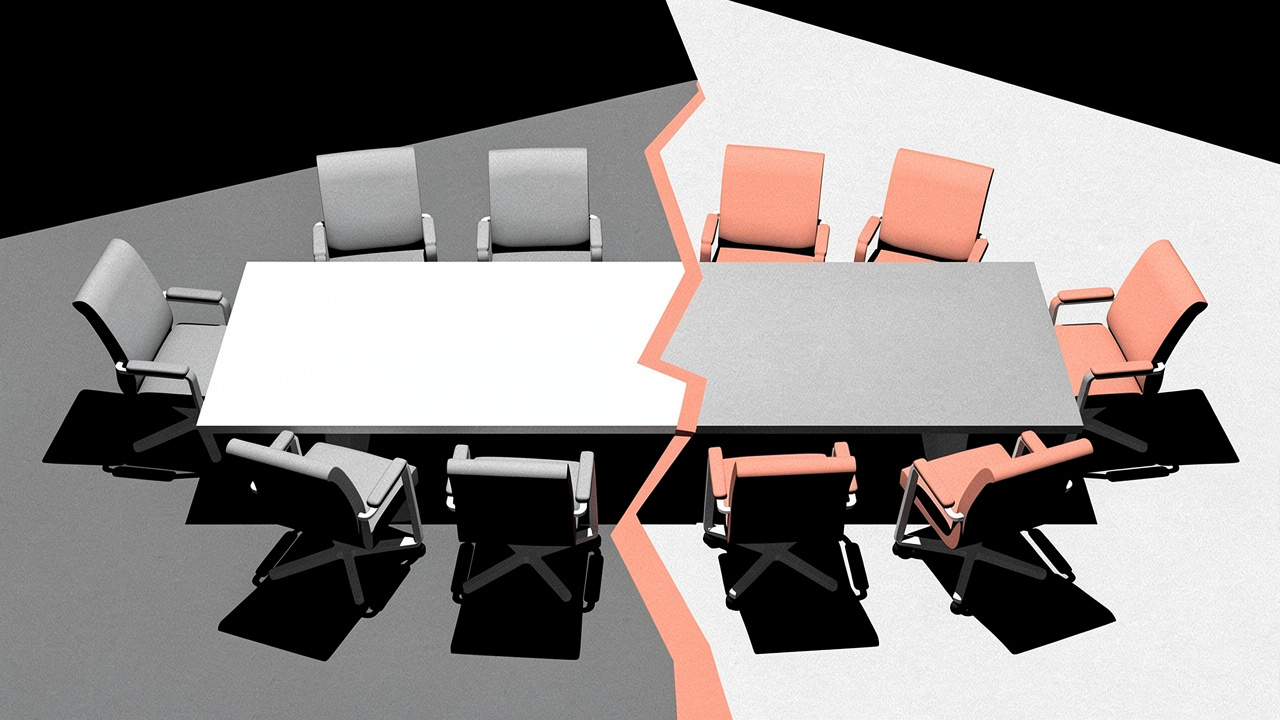
Kevin Warsh does not inherit a unified Federal Reserve. He inherits a Fed whose appetite for rate cuts is thinner than markets have priced; a board fractured into three camps; a closing window for reversing course without major financial or political damage.
The evidence: Jerome Powell’s final FOMC meeting produced an 8-4 vote—the largest dissent in 34 years (since October 1992)—with four members objecting to the statement’s forward guidance on rate cuts. Stephen Miran wanted immediate cuts. Beth Hammack, Neel Kashkari, and Lorie Logan opposed any language implying dovishness. The FOMC’s unanimity has shattered less than three weeks before Warsh takes the chair on May 15.
This is not a procedural drama. This is a constraint on Warsh’s governing majority. Markets have priced one rate cut by December 2026 using CME FedWatch. But the dissent reveals that four members believe even holding rates is too dovish. Warsh’s first test—whether to cut or hold—will require building a coalition on a board where the cutting camp is outnumbered. Leading a fractured board is a fundamentally different game than governing by consensus.
The Warsh Coalition Problem
Four votes constitute a minority on the 12-member Federal Open Market Committee. But those four votes signal something that markets have been slow to price: the consensus for rate cuts is not a consensus at all. It is a fragile coalition that depends entirely on labor-market deterioration convincing the hawks they have room to ease.
Hammack and Kashkari have been consistent hawks. Hammack, newly rotated into a voting seat, has signaled publicly that she views the neutral rate—the interest rate consistent with full employment and price stability—as closer to 4% than 3.5%. Kashkari has argued that the Fed should not cut until inflation reaches the 2% target decisively, not just approaches it. Logan, the Dallas Fed president, shares their inflation focus but sided with them today, suggesting the message discipline among inflation-focused governors is tightening.
Miran’s dissent for cuts is notable for the opposite reason: he is a Trump appointee and a recent addition to the board, yet he was outvoted by three other recent appointees. Warsh, also a Trump appointee, will arrive to a board where Trump administration appointees are not unified on the rate path. That matters politically, even if it is not primarily a political question.
If wage growth slows sharply in May or June, labor-market weakness will create pressure for cuts. But the size of the coalition for cutting will be smaller than Powell enjoyed. Powell could move toward cuts knowing he had consensus on the FOMC; Warsh will have to move knowing he is negotiating with dissenters who have already stated their position explicitly and publicly.
By the Numbers
- Four FOMC members dissented on April 29, the largest dissent in 34 years (since October 1992); all four objected to guidance implying rate cuts were coming.
- CME FedWatch is pricing a 67% probability of at least one 25-basis-point rate cut by December 31, 2026, implying markets expect Warsh to override the dissent camp.
- The Fed’s own SEP median projection shows only 25 basis points of cuts in 2026, suggesting internal consensus is weaker than market pricing.
- Regional unemployment shows mixed trends in recent months, with some states showing increases and others holding steady; any sustained weakness could create an argument for cuts, and Warsh will monitor labor-market data closely for policy signals.
Powell’s Parting Gift and Warsh’s Inheritance
Powell’s statement on April 30 explicitly acknowledged the dissent, a break from custom. Normally, FOMC dissents are recorded but not elevated in narrative. Powell chose to address it directly, stating that the board’s diversity of opinion on rate timing “reflects genuine disagreement about the optimal path forward.” This signals that the majority for cuts is real, but it is not overwhelming.
That statement does two things for Warsh. First, it legitimizes the dissent as a principled policy disagreement, not a holdout or obstruction. Second, it signals to markets that Fed communication on rate cuts will be messier than Powell’s recent tenure. Powell had to manage the transition from inflation-fighting to rate-cut messaging. Warsh has to manage a board that is genuinely split on whether the transition should happen at all.
Warsh’s most recent Fed service was as a governor from 2006 to 2011 (resigned March 31, 2011), during and after the financial crisis. He was a moderate hawk on balance-sheet policy and voiced skepticism of the ultra-low-rate era that followed. His appointment signals a policy shift toward constraint. Coalition-building is now essential, especially when four board members have explicitly stated their position in dissent.
The Greenspan parallel is instructive. In October 1993, Greenspan believed the Fed’s hiking cycle was nearly complete. Bond markets disagreed. Yields spiked, the Fed was surprised by market discipline, and officials were forced to raise rates six more times than the initial consensus expected. A divided central bank is vulnerable to market pressure when the dissent signals deeper ideological fracture than the official statement reveals.
Warsh faces a mirror image. If labor markets weaken and he signals openness to cuts, the Hawks will use their dissent as institutional cover to block or delay them. If he maintains a hawkish stance and markets interpret that as a regime shift away from Powell’s accommodationism, the yield curve could flatten further and growth concerns could spike. He cannot please both camps simultaneously.
The Real Constraint: Not Rate Cuts, But Board Unity
The immediate policy question is October; the Fed will likely hold rates at 3.5-3.75% through summer. But the April dissent has shifted the underlying game. Warsh cannot call for rate cuts as a consensus position. He will have to argue for them as a necessary response to labor-market weakness, while Hammack and Kashkari argue that patience is the prudent course.
Markets will interpret every FOMC statement and press conference through the lens of this division. If Warsh says the Fed is “data-dependent” on cuts, markets will parse whether Hammack nodded or frowned. A strong central bank speaks with one voice, and the rate path is communicated clearly. A fractured board speaks with many voices, and rate expectations whipsaw.
Powell managed to hold consensus on the 2022 hiking campaign because inflation was the clear enemy. Warsh must govern a board where inflation fears persist but labor-market fears are rising. The dissent today signals that this ideological difference will not be papered over by consensus-seeking. It will persist in voting records and public statements.
Warsh has roughly six weeks before his first FOMC meeting in June. In that time, he will learn who his reliable allies are on cuts, who the immovable hawks are, and whether the centrists (the 8-member majority that voted no-dissent today) will hold or fracture when the economic data force real policy choices. The April dissent is not the end of the story. It is the opening move of a much longer negotiation.
The market is pricing in a rate-cut path based on Powell’s 12-year leadership of consensus. Warsh is inheriting a board where consensus has broken down. Until he rebuilds it, rate-cut expectations will remain hostage to the dissent camp’s ability to shape narratives and block weak majorities. That is the real constraint on Warsh’s early tenure, and it is one markets have not yet fully priced.