justice
Supreme Court Guts the Voting Rights Act's Core Remedy for Racial Gerrymandering
In Louisiana v. Callais, a 6-3 majority rewrites 40 years of VRA jurisprudence by eliminating the requirement that states draw majority-minority districts to remedy racial vote dilution.
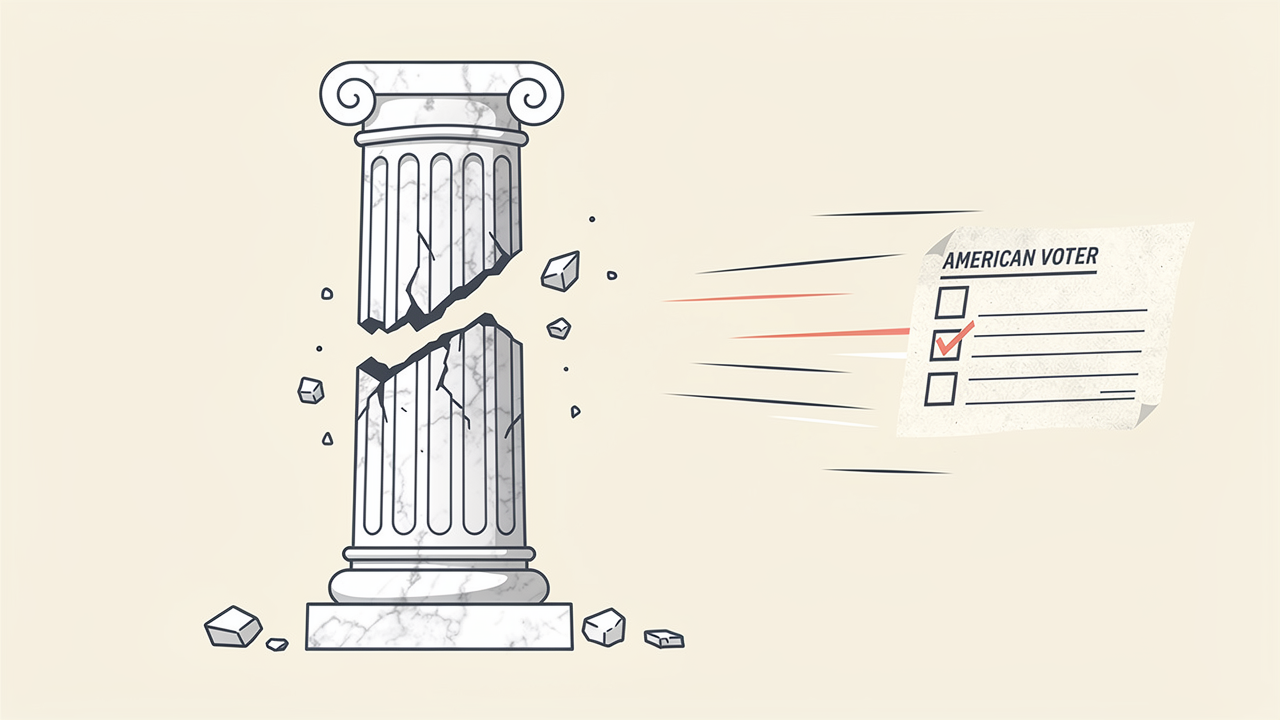
For four decades, the Voting Rights Act’s Section 2 meant one thing: if a state’s electoral district diluted the voting strength of a racial minority, federal judges could order the state to draw a majority-minority district in which that minority could elect a candidate of choice. That doctrine, built on repeated Supreme Court precedents since 1982, shaped redistricting across the country. On Wednesday, a 6-3 Supreme Court majority erased it.
In Louisiana v. Callais, Justice Samuel Alito wrote for the conservative wing that Section 2 does not require states to create majority-minority districts at all. The statute, he argued, demands only that states refrain from intentionally discriminating on the basis of race; it does not command states to remedy racial vote dilution once discrimination is proven. The difference is vast. For four decades, proving vote dilution meant a state must create a majority-minority district. Under Alito’s reading, proving vote dilution means nothing legally; states remain free to pack and crack Black voters without legal remedy.
This is not a technical fix to a narrow corner of VRA doctrine. Alito’s opinion rewrites what the statute means—not by striking Section 2 down, but by reversing how courts interpret it. The immediate consequence: federal judges in district courts around the country now face mandatory dismissal of pending Section 2 cases. The secondary consequence: Republican attorneys general are already filing suits to challenge majority-minority districts that have stood for a decade or more. The doctrinal consequence: the Voting Rights Act, renewed by Congress six times and hailed as the crown jewel of civil rights enforcement, is now “all but a dead letter,” as Justice Elena Kagan wrote in dissent.
The Doctrine Before Wednesday
Section 2 of the Voting Rights Act, amended in 1982, establishes a straightforward prohibition: no jurisdiction shall enact an electoral district that has the effect of diluting the voting strength of a racial minority. For decades, courts read this to mean: if a district packs a racial minority so tightly that it cannot elect a candidate of choice, or cracks minorities across many districts so their votes are drowned out, that district violates Section 2. The remedy: redraw the district to allow the minority to form a majority of voters and elect its preferred candidate—a majority-minority district.
This reading drove redistricting across the country. In the 1990s, state legislatures drew hundreds of majority-minority districts, sometimes with jagged boundaries that incensed commentators. In response, the Court began to narrow the doctrine. In Miller v. Johnson (1995) and Bush v. Vera (1996), the Court held that race could not be the predominant factor in drawing districts, even if the motive was to remedy vote dilution. The tension became visible: Section 2 seemed to require majority-minority districts, but the Equal Protection Clause seemed to forbid them. Courts resolved the tension by saying race could be one factor among many, and if a state could show that a majority-minority district served legitimate purposes (remedying discrimination, complying with Section 2), the district survived judicial scrutiny.
For the last 30 years, that balance held. Section 2 claims proceeded. Majority-minority districts stood. Republican lawyers chipped away at the doctrine but did not overturn it.
Until Wednesday.
Alito Breaks the Line
Alito’s opinion in Louisiana v. Callais rests on a single interpretive move: Section 2 prohibits intentional discrimination, but does not require jurisdictions to remedy unintentional discrimination once it is proven. The distinction maps onto statutory language. The statute says an electoral practice is unlawful “if it results in a denial or abridgement of the right of any citizen of the United States to vote on account of race or color.” Alito reads “results in” to mean outcomes that flow from intent, not outcomes that flow from the structure of an electoral map. If a district was drawn without intent to discriminate but happens to dilute minority voting strength, Alito’s logic goes, the statute does not apply.
This reading contradicts four decades of precedent in which the Court found vote dilution without requiring proof of discriminatory intent. In Thornburg v. Gingles (1986), the benchmark case, the Court held that Section 2 applies to any electoral practice that has the effect of denying minorities the ability to elect candidates of choice, regardless of whether the jurisdiction intended to dilute their votes. That holding was reaffirmed in Reno v. Bossier Parish (2000), Alabama Legislative Black Caucus v. Alabama (2015), and a string of other decisions.
Alito does not overturn those cases explicitly. Instead, he reinterprets them. The Gingles standard, he writes, applies only to voting practices that actively dilute minority voting strength through packed or cracked districts. It does not apply to districts that are merely drawn without affirmative steps to remedy existing dilution. The move is subtle but total: a state can now draw a district that packs 70 percent Black voters, diluting their strength in adjacent districts, and Section 2 does not apply because the state did not intend to dilute them (and, under Alito’s reading, the statute does not address unintentional dilution).
Justice Kagan’s dissent, joined by Justices Sotomayor and Jackson, attacks the opinion’s logic directly. The statute’s text—“results in a denial or abridgement”—does not distinguish between intentional and unintentional dilution. Congress drafted Section 2 in 1982 specifically to move away from requiring proof of intent, Kagan notes. The legislative record is clear: intent is irrelevant; effects are all that matters. By reading intent back into the statute, Alito is unmaking what Congress intentionally made.
But the majority holds. The 6-3 vote—Roberts, Thomas, Alito, Gorsuch, Kavanaugh, and Barrett—is decisive. Gorsuch’s inclusion is notable. Gorsuch has a history of originalist readings that sometimes protect individual rights against government power. Here, his originalism runs toward state sovereignty. He joined Alito on the ground that Section 2’s plain text does not command states to create majority-minority districts, only to avoid intentional discrimination.
What Happens Now
The immediate effect is clarity and chaos. District courts around the country have Section 2 cases pending. Under Callais, those cases are now losers. A voting-rights group claiming a district dilutes minority strength will find the statutory hook pulled away. Federal judges will have no choice but to dismiss.
Simultaneously, Republican attorneys general have prepared challenges to existing majority-minority districts in multiple states, including Alabama, Georgia, Louisiana, Mississippi, North Carolina, South Carolina, and Texas. For years, these lawsuits sat on hold because Section 2 clearly protected majority-minority districts. Now Callais removes that shield. The lawsuits will proceed; district courts will apply Alito’s narrow reading of Section 2; states will win; and existing majority-minority districts will be redrawn or eliminated.
How many seats is at stake? Analyses suggest that the loss of majority-minority districts nationwide could result in a significant seat swing in Congress toward Republicans if maps are redrawn before November 2026, with some estimates ranging up to 15-to-20 seats depending on how aggressively states redraw. That assumes current demographic patterns hold and assumes states act quickly to redraw maps. Some states (like Texas, with a Republican AG and Republican legislature) will move fast. Others (like California, with a Democratic AG and Voting Rights Act defenders) will resist through state constitutional law. But the trajectory is clear: Callais opens the door to mass elimination of majority-minority districts, and Republican AGs will walk through it.
The question of state constitutional protection remains open. Some state constitutions (California, Illinois, New York) explicitly protect voting rights and nondiscrimination. State courts can interpret state law to require majority-minority districts even if federal Section 2 does not. But that is a state-by-state battle, and it requires Democratic attorneys general and state legislatures to resist redistricting pressure. In Republican-controlled states, state constitutional protections are weaker or absent. The net effect will be a northward and westward shift in voting power, as the South’s Black voting strength, once protected by majority-minority districts, fragments under Callais.
Why Callais Is Not a Narrow Ruling
One clarification: Callais does not formally repeal Section 2. The statute remains on the books. States still cannot intentionally discriminate on the basis of race in drawing electoral districts. But in practice, proving intentional discrimination in redistricting is nearly impossible. Legislatures can always point to district shapes that serve legitimate purposes: compactness, protection of communities of interest, or preservation of geographic subdivisions. Once intent is off the table, proving discrimination is functionally impossible.
Justice Alito likely anticipated this objection. His opinion emphasizes that the statute, even under his reading, forbids intentional discrimination. But the majority also knows what voters and voting-rights advocates know: intent is almost never provable in redistricting cases. By moving the focus from effects to intent, Alito’s opinion strips Section 2 of its teeth. The statute still exists; it just does not enforce anything.
The Arc of Doctrine
Callais does not arrive alone. It fits into a 30-year doctrinal arc that has narrowed voting-rights protections at every step.
Shelby County v. Holder (2013) gutted Section 5 of the VRA—the preclearance requirement that forced southern states to get federal approval before changing electoral rules. That decision left Section 2 as the primary remaining enforcement tool. States that previously needed federal approval could now redraw districts at will; voting-rights groups had to sue under Section 2 to challenge new maps.
Now Callais narrows Section 2 to the point of uselessness. The arc is complete. The Voting Rights Act, renewed by Congress in 1982 and again in 2006, has been systematically dismantled—not through explicit repeal (which Congress did not authorize), but through reinterpretation. The statute’s text remains identical. Its meaning has been reversed.
The Lochner Echo
There is a historical whisper in Callais that deserves attention. In the Lochner era (1897-1937), federal courts struck down federal regulations of state commerce and labor on the ground that states retained sovereign police power over commerce, labor, and property within their borders. The federal government, courts held, could not intervene. Even when states harmed interstate commerce or exploited workers, federal law retreated in deference to state choice.
Lochner is now understood as a cautionary tale: courts should not use state sovereignty to block federal remedies for nationwide harms. But Callais resurrects that logic in a voting-rights context. The majority says: states have sovereignty over their electoral maps; the federal government cannot force states to create majority-minority districts; federal remedy must defer to state choice. The parallel is not perfect, but it is exact enough to notice. Both doctrines privilege state authority over federal statutory remedies, both cite deference to state sovereignty as the limiting principle, and both narrow federal tools to address what the federal government views as state-inflicted harm.
The Court’s ideological direction on this question is visible. Chief Justice Roberts, writing separately in earlier VRA cases, has long held that the VRA, however noble, represents a federal intrusion into core state sovereignty over elections. Alito’s opinion echoes that theme. The message to states is clear: you are free to redraw your maps as you wish. Federal courts will no longer second-guess your choices.
Who Knew This Was Coming
For voting-rights litigators and advocacy organizations, Callais is not a shock but a confirmation of a trajectory visible since Shelby County. The conservative Court majority has made plain, through a series of decisions and votes, that it views voting-rights enforcement as an intrusion on state choice. Callais is the culmination.
For Black voters and voting-rights advocates, the consequence is strategic retreat. Section 2 claims that seemed winnable six months ago are now losers. Litigation strategies built over decades no longer work. The focus will shift to state constitutional law, state legislation, and congressional action. But federal courts are now off the table as enforcers of voting rights in electoral redistricting. That is the real loss in Callais: not the statute itself, but the federal judiciary’s willingness to enforce it.
The impact will be measurable by November 2026. Look for redrawing of majority-minority districts in the South and Southwest; look for a shift in congressional delegation toward Republicans; look for voting-rights litigation to move from Section 2 claims (now useless) to state constitutional claims (now primary). The architecture of voting-rights enforcement has been rebuilt in a single decision. Federal remedies are gone. States now have the freedom to use electoral maps as they choose.